Blog
6 Powerful Truths About Travertine Tile Types: Stunning Benefits & Hidden Drawbacks

When it comes to choosing a flooring solution that combines natural beauty, lasting durability, and a timeless sense of elegance, travertine tile types stand out as one of the most popular and enduring options available. This natural stone, formed over thousands of years by mineral deposits from hot springs and limestone caves, has been used in architecture since ancient Roman times. Its signature appearance—marked by subtle movement, unique pitting, and warm, earthy tones—makes it a favorite among homeowners, designers, and architects alike. Whether you’re aiming for a classic, rustic, or contemporary look, travertine has the versatility to deliver.
What makes travertine tile types especially appealing is their wide range of finishes, colors, and formats. Each type—be it tumbled, honed, brushed, or polished—offers a distinct look and texture that can dramatically influence the ambiance of your space. Tumbled travertine, for instance, brings an aged, weathered character that’s perfect for Mediterranean-inspired patios or vintage-style bathrooms. Polished travertine, on the other hand, delivers a sleek, refined finish ideal for elegant entryways and upscale living rooms. This adaptability allows travertine to be used in virtually any setting, from indoor floors and walls to outdoor walkways, pool decks, and even facades.
However, choosing the right travertine tile types requires more than just aesthetic preferences. As a porous natural stone, travertine is susceptible to moisture absorption and staining if not properly sealed and maintained. This means that while it is incredibly durable, it does require some ongoing care to keep it looking its best. Understanding the stone’s characteristics—its hardness, porosity, finish, and how it reacts to different environments—is essential for long-term satisfaction. Some types of travertine may be better suited for low-traffic areas, while others are designed to withstand outdoor weathering or heavy footfall.
In this guide, we’ll take a deep dive into 7 essential truths about travertine tile types, covering everything from the stone’s natural variations and design versatility to its maintenance requirements and cost considerations. You’ll learn the real-world pros and cons, get an overview of the most common finishes, and discover expert tips on how to choose the ideal type of travertine tile for your home or commercial project.
Whether you’re renovating a kitchen, upgrading a master bath, installing new flooring in a high-traffic hallway, or revamping your backyard oasis, understanding the different travertine tile types will empower you to make a confident and informed decision. With the right choice, you’ll enjoy not only the beauty and value that natural stone adds to a space but also the satisfaction of a surface that will age gracefully and serve you for years to come.
Table of Contents
1. Travertine Offers Natural Beauty That’s Hard to Beat
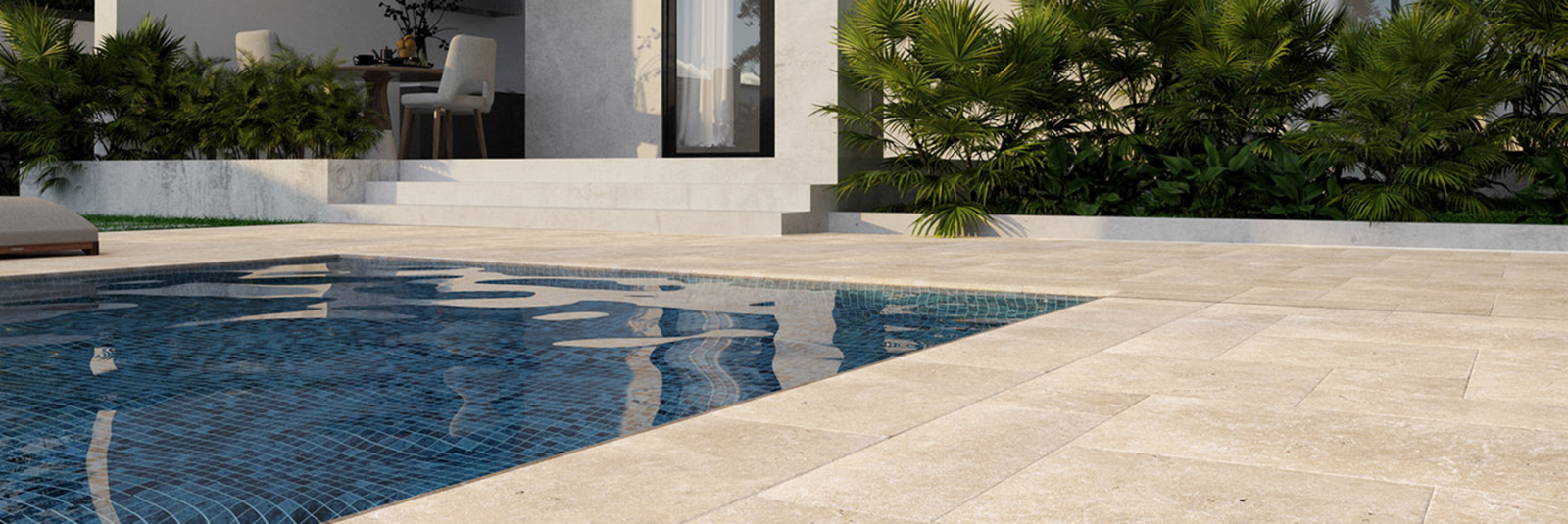
One of the biggest advantages of travertine tile types is their unmistakably unique and organic appearance. Unlike porcelain or engineered surfaces that often strive for uniformity, travertine tile types proudly showcase natural variations in color, veining, and texture that form over thousands of years within the earth. These irregularities are not imperfections—they’re what give the stone its distinct charm and character. Every tile tells a story, with subtle differences that ensure no two pieces are ever exactly alike. This individuality brings depth and richness to a space, transforming even the simplest room into something visually dynamic and inviting.
The soft, neutral tones found in travertine tile types—ranging from creamy ivory and classic beige to deeper hues like walnut, gold, and silver—allow them to harmonize effortlessly with almost any color palette. Whether your aesthetic leans toward clean, contemporary minimalism or a more rustic, Mediterranean-inspired look, travertine tiles offer a natural elegance that complements both modern and traditional design schemes. Their ability to bridge stylistic eras makes them especially appealing for long-term projects where enduring beauty is a priority.
In addition to their visual appeal, travertine tiles are often chosen for their tactile qualities. Many finishes, such as honed or tumbled, provide a soft, matte surface that feels more grounded and authentic than the high-gloss alternatives often found in ceramic or porcelain tiles. This subtle texture adds warmth and a sense of calm to any environment, making travertine a go-to material for those seeking a serene, organic ambiance in their spaces.
Whether installed in a high-traffic kitchen, a serene bathroom retreat, a welcoming foyer, or a sun-drenched patio, travertine tile types offer a cohesive and timeless foundation. Their ability to adapt across different rooms and settings—indoors and out—makes them a truly versatile choice. More than just a design decision, choosing travertine is a commitment to quality, authenticity, and the kind of enduring beauty that never goes out of style.
2. Durability That’s Proven by History
Travertine is one of the oldest and most revered building materials in the world — and for good reason. Its strength and durability have stood the test of time, proven through centuries of use in some of history’s most iconic and enduring structures. From the majestic Roman Colosseum to the ancient city of Hierapolis in Turkey and the network of aqueducts and bath complexes across Europe, travertine has played a key role in architectural feats that still inspire awe today.
These historical landmarks aren’t just visually impressive — they’re living proof of how resilient this natural stone truly is. For today’s homeowners, designers, and builders, this translates into a powerful advantage: when you choose travertine tile types, you’re not simply selecting a floor or wall covering — you’re investing in a material with a legacy of strength, craftsmanship, and permanence.
This tradition continues in the modern world. Renowned architectural landmarks like the Getty Center in Los Angeles and the Willis Tower in Chicago have integrated travertine tile types into their design, illustrating the stone’s ongoing relevance and reliability in both contemporary and classic spaces. These examples show that travertine is not only beautiful, but also built to last — capable of withstanding the pressures of time, weather, and daily use without compromising its natural elegance.
When properly sealed and professionally installed, travertine tile types are remarkably durable. They can handle high foot traffic, shifting temperatures, moisture, and direct sunlight, making them ideal for a wide range of indoor and outdoor applications. From sophisticated entryways and living rooms to expansive pool decks, patios, and garden paths, travertine tiles deliver timeless appeal without sacrificing performance. It’s no wonder they remain a top choice for those who want more than just aesthetics — they want a lasting legacy underfoot.
3. Travertine Tile Types Come in a Wide Range of Finishes
One of the most appealing and versatile aspects of travertine tile types is the wide range of available finishes, which allow you to tailor the look, texture, and functionality of your space to match your design goals. Whether your vision leans toward sleek sophistication or rustic charm, the finish you choose can dramatically influence both the style and performance of your travertine surfaces. This variety is one of the reasons travertine tile types continue to be a favorite among interior designers, architects, and homeowners seeking both form and function in a natural stone.
Typically, travertine tile types are offered in four main finishes: polished, honed and filled, brushed and chiseled, and tumbled—each with its own distinct aesthetic and practical strengths.
A polished finish delivers a smooth, high-gloss surface that reflects light and creates a refined, elegant atmosphere. This type of tile is perfect for formal settings such as upscale bathrooms, luxury foyers, hotel lobbies, or chic living rooms where a sleek, modern appearance is desired. Polished travertine enhances color richness and adds a touch of glamour to any space.
In contrast, the honed and filled finish offers a smooth but matte surface, which tones down the shine while retaining a clean, contemporary look. This option is ideal for those who appreciate understated elegance. It works beautifully in areas like kitchens, hallways, and bathrooms where slip-resistance and subtlety are both important. The “filled” component refers to the natural holes in the travertine being smoothed out with a matching material, resulting in a more uniform surface.
For those seeking an earthy, aged aesthetic, brushed and chiseled travertine provides a more rustic appearance. These tiles feature textured surfaces and irregular, distressed edges that evoke the feel of antique European villas or Old-World pathways. They are perfect for creating character-rich spaces such as wine cellars, fireplaces, or country-style interiors.
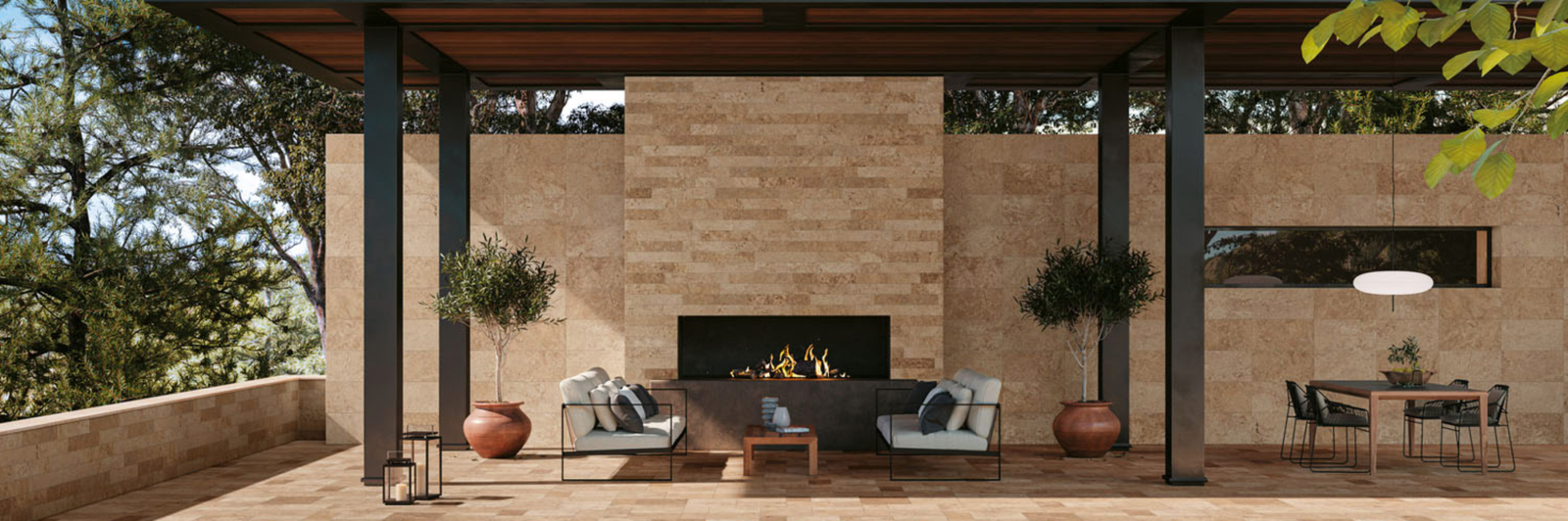
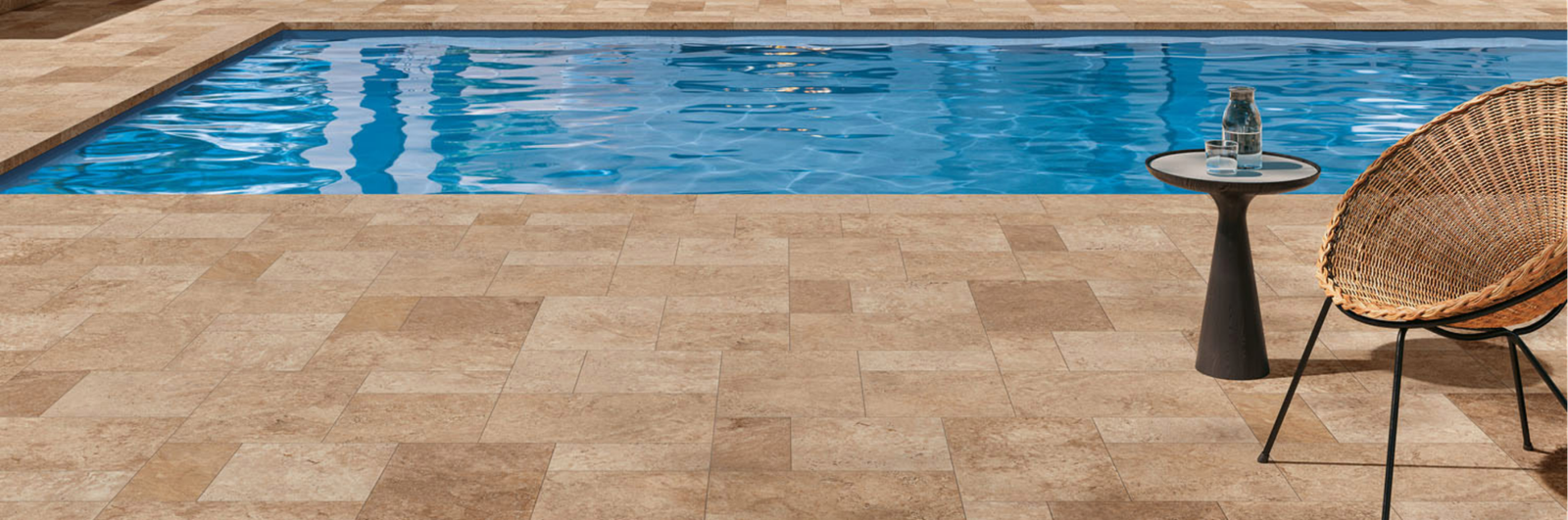
Finally, tumbled travertine tiles are known for their naturally weathered look, soft edges, and slightly porous surface. They provide a casual, timeworn feel that works wonderfully in outdoor applications like patios, pool surrounds, garden paths, and outdoor kitchens. Their natural grip also makes them a great choice for wet areas, adding a layer of both beauty and safety.
The wide selection of finishes offered across different travertine tile types makes it easier than ever to customize your surfaces to match your personal taste and the practical needs of your environment. Whether you’re after timeless elegance, rustic charm, or modern minimalism, there’s a finish to help you bring your design vision to life with lasting impact.
4. French Pattern Adds Bold, Artistic Flair
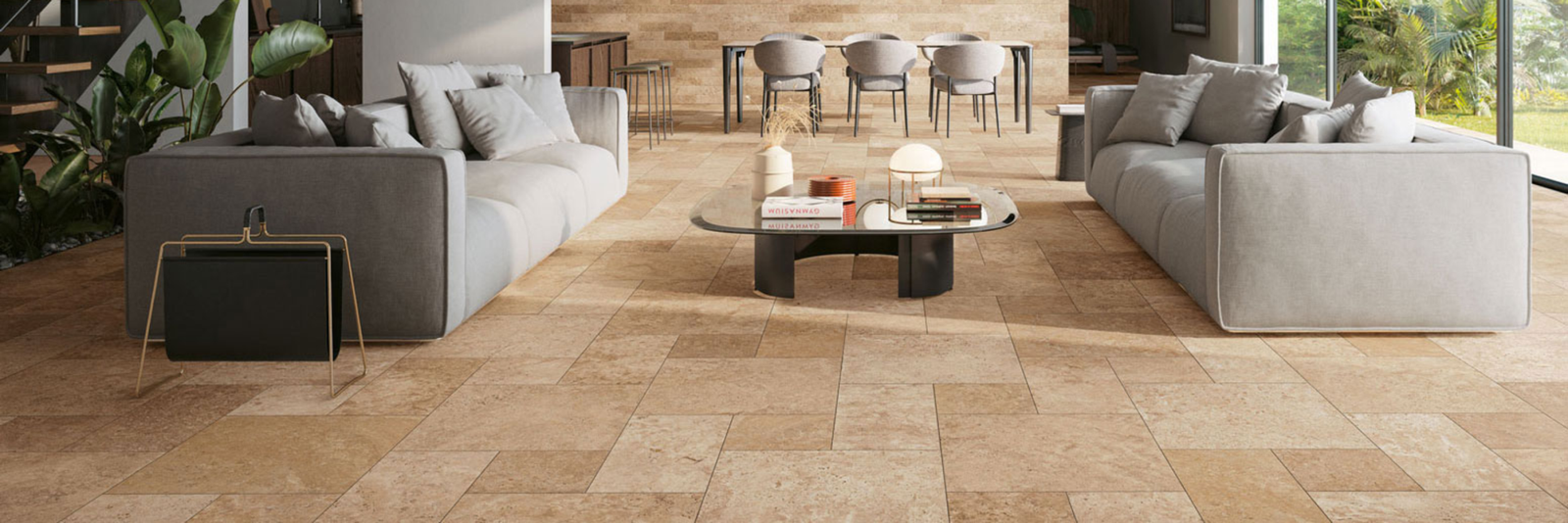
If you’re aiming to create a dynamic, eye-catching layout that elevates your space beyond traditional flooring designs, consider using a French pattern. Also known as the Versailles pattern, this layout features a repeating modular arrangement of tiles in varying sizes—usually a mix of large rectangles and squares. The result is a sophisticated, flowing design that adds rhythm, texture, and a sense of artistry to your surfaces. This approach is especially striking when paired with a travertine tile type, as the stone’s inherent color variation and natural veining are beautifully emphasized through the layout’s complexity.
A French pattern layout brings out the organic beauty of travertine in a way that standard grid arrangements often can’t. The interplay of sizes and shapes creates movement across the surface, drawing attention to the stone’s subtle tones and textures. This makes it an ideal choice for expansive areas like patios, great rooms, formal entryways, courtyards, or even pool surrounds—spaces where you want both impact and cohesion. Because of its custom feel, the French pattern adds a high-end, designer-quality finish that can instantly elevate the overall aesthetic of a property.
But French pattern travertine flooring isn’t just about appearance—it also offers several functional advantages. One of the most notable benefits is its ability to minimize the visibility of seams and grout lines. Thanks to the irregular arrangement, the pattern helps disguise joints, creating a more seamless, continuous look. It also has the unique effect of making rooms appear larger, as the visual flow leads the eye outward in multiple directions. This makes it an especially smart solution for open-concept layouts or outdoor living areas where continuity and spatial harmony are key.
To maximize the impact of this layout, pairing the French pattern with a textured travertine tile type—such as tumbledor brushed—can further enhance its Old-World charm and timeless appeal. These finishes soften the stone’s surface and edges, adding character and depth that perfectly complement the intricacies of the layout. The result is a bold yet elegant flooring solution that exudes personality and craftsmanship—something flat, uniform tile arrangements simply can’t replicate.
Ultimately, selecting a travertine tile type in a French pattern is more than just a style choice; it’s a statement of intention. It signals a thoughtful approach to design—one that values both form and function, and one that embraces the natural irregularities of stone as a source of beauty rather than something to be concealed. Whether you’re designing a grand outdoor terrace or an inviting indoor space, the French pattern is a proven way to create impact with enduring style.
5. Porosity Is a Concern — But Easily Solved
One of the most commonly cited drawbacks of travertine tile types is their natural porosity. As a sedimentary rock composed primarily of limestone, travertine naturally contains small holes, voids, and channels formed during its geological development. These tiny pores can absorb water, trap moisture, and become susceptible to staining, mildew, or even erosion if left untreated. Understandably, this can raise concerns for homeowners looking to install travertine in moisture-prone areas such as bathrooms, kitchens, laundry rooms, or outdoor patios.
However, this characteristic doesn’t have to be a dealbreaker. Today, reputable suppliers offer sanded and sealed travertine tile types that effectively mitigate these issues. The sanding process smooths the surface and fills in many of the natural cavities, while sealing applies a protective layer that acts as a barrier against moisture, spills, and stains. When properly sealed, travertine tile types become far more resistant to environmental factors, making them a safe and reliable option even in areas with high humidity or exposure to the elements.
Regular maintenance is also key to preserving the look and functionality of sealed travertine. Fortunately, upkeep is minimal—most sealed travertine tiles only need to be resealed every one to two years, depending on foot traffic, UV exposure, and whether the area is indoors or outdoors. This simple routine ensures that your tiles remain protected while continuing to showcase their natural beauty.
Choosing a high-quality supplier who either delivers factory-sealed travertine tile types or offers professional sealing services is an essential step. This not only saves time and effort during installation but also extends the life of your stone by protecting it from day one. Investing in pre-treated or professionally sealed tiles adds a level of security and convenience that makes all the difference, especially in high-traffic or high-moisture areas.
So while porosity is an inherent feature of travertine, it’s far from a fatal flaw. With the right preparation and care, it becomes a manageable characteristic rather than a limitation. When handled properly, sealed travertine tile typescontinue to offer unmatched natural beauty, warmth, and longevity—without sacrificing durability or performance.
6. It’s a Long-Term Investment That Pays Off
While travertine tile types may require a higher initial investment compared to materials like ceramic, laminate, or vinyl, it’s essential to view this cost through the lens of long-term value rather than short-term savings. Travertine is not just a surface — it’s a statement of quality, tradition, and enduring beauty. With its unmatched blend of aesthetic appeal, historical significance, and natural durability, travertine tile types offer a return on investment that grows over time. Unlike synthetic materials that may wear out, discolor, or fall out of fashion, travertine continues to deliver both style and substance year after year.
Properly cared for, travertine tile types can last for decades — even generations. Their longevity is part of what makes them so desirable in both residential and commercial settings. And because travertine is a natural stone, its visual appeal doesn’t fade with time. Instead, it develops a patina that adds depth and character, enhancing its organic charm. While other materials might look dated after a few years, travertine maintains a timeless elegance that complements both traditional and contemporary designs.
From a financial standpoint, installing travertine is also a strategic move. Natural stone surfaces are widely regarded as premium features in real estate, increasing both curb appeal and overall property value. Whether you’re renovating your forever home or prepping to sell, the presence of high-quality stone like travertine sends a clear message: this is a home built with care, taste, and attention to detail. It signals luxury, permanence, and good design sense — traits that appeal to both buyers and appraisers.
So while the upfront cost of travertine tile types might be higher than other options, the long-term payoff is undeniable. You’re not just purchasing flooring or wall coverings — you’re making an investment in a surface that will stand the test of time, age gracefully, and continue to add value to your home for years to come. In the end, travertine doesn’t just pay for itself — it elevates everything around it.
Final Thoughts
Travertine tiles are more than just a flooring material — they’re a reflection of craftsmanship, heritage, and refined taste. When thoughtfully selected and properly installed, they become an enduring feature of your home that balances practicality with undeniable beauty. From the ancient halls of Rome to today’s most elegant modern interiors, travertine tile types have stood the test of time — not just because of their durability, but because of the unmistakable warmth and character they bring to every space.
By taking the time to understand the various travertine tile types, their finishes, patterns, strengths, and limitations, you’re making an informed investment that aligns with both your design goals and your lifestyle needs. Whether you opt for the mirror-like elegance of polished tiles, the subtle sophistication of honed and filled, the rustic charm of brushed and chiseled, or the weathered beauty of tumbled stone — there’s a finish to suit every aesthetic. Combine these options with layouts like the classic grid or the visually stunning French pattern, and the result is a space that feels not just finished, but elevated.
Of course, quality matters just as much as style. That’s why it’s essential to work with a reputable supplier who provides high-grade materials, expert guidance, and sealing services that protect your investment from day one. A trustworthy source will ensure you receive travertine tile types that are consistent in quality, properly treated for durability, and ready to deliver long-term performance in any environment — indoors or out.
In the end, travertine flooring is more than a design choice — it’s a foundation you build your life upon. It weathers foot traffic, carries your memories, and adds value to your space with every passing year. When done right, it’s not just a beautiful surface. It’s a legacy you walk on every single day.
Contact us today and let us help you make that vision come true at (813) 885-6900 or email us at info@stone-mart.com for more information.
Or drop by our showroom to see our stunning collection: Tampa, FL, St Petersburg, FL, Orlando, FL, Naples, FL, Sarasota, FL, Fort Myers, FL, Jacksonville, FL, Houston, TX and Savannah, GA