Blog
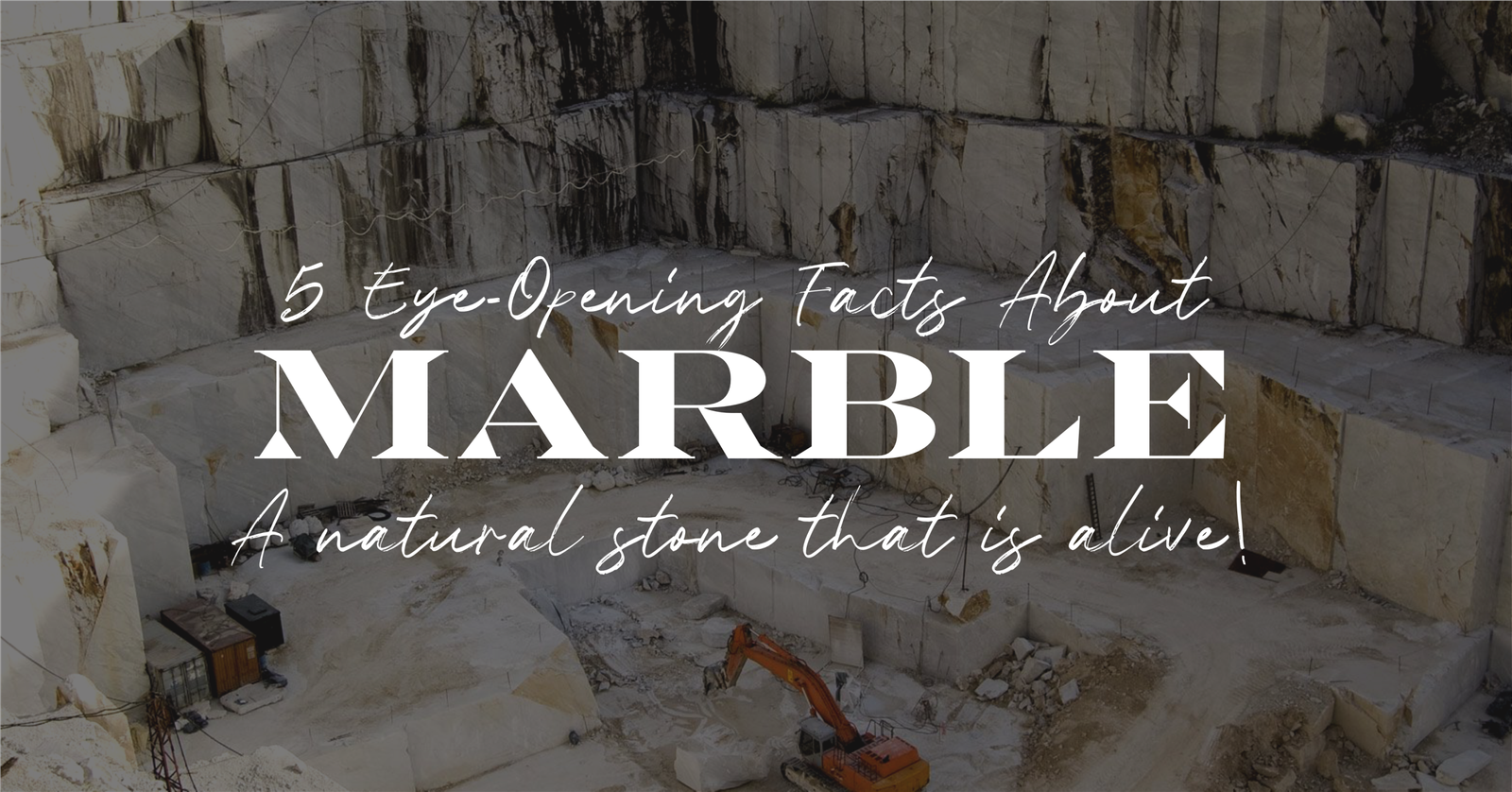
5 Eye-Opening Facts About Marble: A natural stone that is alive!

The Living Stone
When we think of marble, our minds often conjure images of elegant kitchen countertops, the stately grandeur of ancient columns, or the refined grace of timeless sculptures displayed in museums and historic buildings.
It’s long been associated with artistry, permanence, and a certain quiet luxury — the kind that doesn’t need to announce itself to be felt. However, this remarkable material is far more than just a decorative surface or a marker of status. It is, in its truest form, a living substance — one that breathes in subtle ways and responds gently to the passage of time. With what some might call a porous soul, it doesn’t simply exist within a space; it engages with it. It listens, it absorbs, and it remembers.
Table of Contents
This interaction is slow, almost imperceptible at first — a delicate conversation between material and environment. Light filters across its surface and lingers. Air moves around it, seasons shift, hands brush against it, and over time, it begins to change. It doesn’t resist these influences; it welcomes them. Its tone might deepen in places touched most often, its surface might soften where it has served faithfully for years. These changes are not signs of wear, but signs of life. It holds onto the moments we often forget — the everyday gestures, the accidental beauty, the quiet rituals that shape a home.
Unlike many synthetic materials that are engineered to resist change, to maintain a factory-finished appearance no matter what happens around them, this natural stone is not afraid to evolve. It does not seek to stay flawless. Instead, it reveals its truest beauty over time. It embraces imperfection, celebrates authenticity, and wears age with uncommon grace. A splash of wine, the warmth of a cup, the weight of an elbow resting during conversation — all become part of its memory, etched not deeply, but delicately, like whispers on a surface that knows how to listen.
It doesn’t demand attention. But when you stop to notice, you’ll see that it has captured something more meaningful than perfection — presence. What begins as a surface gradually becomes a story. A place where memory lingers long after the moment has passed. Each subtle shift, each soft mark, is a quiet tribute to the life lived around it.
It’s not just a stone; it’s a storyteller — one that captures the essence of moments, memories, and the gentle rhythm of daily life. In its stillness, it listens. In its silence, it speaks. And over time, it becomes not only part of your space, but part of your story — quietly enduring, beautifully alive.
What Makes Marble “Alive”?
At the heart of marble’s dynamic and ever-evolving character lies a fundamental quality: its porosity. This isn’t just a technical feature tucked away in a product description—it is the essence of the material’s identity. It’s what gives the stone its soulful texture, its quiet warmth, and its ability to form a genuine relationship with the spaces and people it touches. Where synthetic materials are designed to resist, to repel, to remain unchanged, this stone does the opposite. It receives. It absorbs. It responds. And through this responsiveness, it becomes something far more than just a surface — it becomes a participant in the life of the home.
Its microscopic pores — countless tiny, unseen openings — form a subtle, invisible network that invites the surrounding world in. Through these tiny channels, the stone drinks in the air, the moisture, the oils, the touch of a hand, the echo of a passing moment. It doesn’t shield itself from time or use; instead, it allows both to move through it. This permeability gives the material a sensitivity that can’t be faked or engineered. It feels honest. Human. Imperfect in a way that makes it all the more beautiful.
Over time, this slow and quiet interaction begins to shape the stone in deeply personal ways. What was once a smooth, untouched plane begins to show signs of life—not through dramatic change, but through the gentle accumulation of moments. A warm cup placed in the same spot each morning. The splash of wine during a long dinner. A smudge from hands kneading dough, again and again. The lingering trace of candlelight or the kiss of steam rising from a freshly poured bath. These impressions settle into the material—not sharply, not instantly, but subtly, like memories etched not in ink but in texture and tone.
These aren’t accidents. They aren’t damage. They are records of experience, signs that the space is being lived in, loved, shared. What some might call stains or wear are, in truth, intimate markings of time’s passage—unfolding not as deterioration, but as enrichment. The surface becomes layered with meaning, like pages in a well-worn book or the creases on a favorite piece of clothing. Each line, each shift, tells a story.
And that is what makes this material so extraordinary. It doesn’t chase perfection; it doesn’t need to. Its value doesn’t lie in remaining untouched, but in its ability to be touched—and touched often. In a world that often prizes the pristine and the untouched, this stone quietly resists, offering instead a different kind of luxury: one rooted in authenticity, connection, and the beauty of impermanence. It reminds us that life leaves marks. That love, creativity, celebration, and even routine leave traces. And those traces, far from diminishing its value, become the most cherished part of its identity.
To live with it is to witness its transformation, to see it mirror the rhythms of your daily life. Slowly, softly, it becomes part of your routine and your rituals. A reflection not of what once was, but of what continues to unfold—imperfect, evolving, and real. It becomes a co-author in the story of a space, recording without judgment, receiving without resistance. What begins as a material choice ends as a relationship, built quietly over time.
This is why it continues to be beloved by those who value more than just aesthetics. It is chosen not simply for how it looks, but for how it lives. For its patience. For its willingness to adapt and absorb. For its refusal to remain distant. It offers not a flawless surface, but a faithful one — one that walks with you, remembers with you, and ages not apart from your life, but right alongside it.
In the end, this isn’t just a stone. It’s a keeper of memories. A gentle reminder that beauty isn’t always found in perfection, but often in the soft, unspoken evidence of time well spent. Of moments lived, of meals shared, of years layered gently onto the surface — until what you’re left with is not just a countertop or a floor, but a story that can only be yours.
A Material That Evolves
This characteristic makes marble incredibly unique among natural materials. It doesn’t simply wear down with time; instead, it transforms — subtly, beautifully, and with quiet resilience. While many surfaces are designed to resist change, to remain untouched by the passage of time, this one welcomes it. It adapts to the rhythm of the environment and the life unfolding around it. Every moment, every interaction, becomes a soft brushstroke in its ongoing evolution. Rather than losing value or beauty as it ages, it gains character. It doesn’t degrade — it deepens. It doesn’t fade — it becomes more itself.
Over the years, its surface takes on new dimensions of texture and tone, shaped not by neglect, but by use — by living. The stone begins as something beautiful, but over time it becomes something meaningful. It becomes familiar, like an old friend whose every line and gesture you recognize. It reflects the story of a space, the pulse of the people who move through it, the echoes of laughter, warmth, stillness, and change.
Imagine a countertop in a lively, well-loved kitchen — the heart of a home. Morning after morning, hands rest in the same places as coffee brews. Afternoons are filled with the sound of chopping, mixing, storytelling. Evenings bring shared meals, spilled wine, flickering candlelight. Over time, the stone begins to gently shift. A soft patina develops in the places touched most often — not as damage, but as a kind of memory. It is subtle, almost imperceptible, but undeniably there. These tender impressions don’t take away from its appeal; they give it soul. The surface, once pristine, becomes a living thing — quietly intimate, warm with the imprint of daily ritual.
Or picture a floor in a sunlit room, where shifting light moves across the surface day after day, year after year. Footsteps find familiar paths, patterns of movement form without thought. Humidity swells and recedes with the seasons. The stone reacts, slowly changing in response to these rhythms — a deepening of tone here, a softening of finish there. Some areas catch the morning sun and brighten, while others hold onto the shadows of evening and darken with time. These transitions are not abrupt; they happen gradually, like the slow ripening of something living, something breathing.
Such transformations are not merely visual — they are emotional, sensory, human. They carry the resonance of life. They speak of presence and memory, of days quietly piling up like layers of sediment. The stone becomes more than surface — it becomes record. It tells a story not in words, but in the language of tone and texture, of warmth and wear. It doesn’t preserve perfection; it reflects reality, and in doing so, becomes more precious with each passing year.
No two pieces are ever the same, not just in origin, but in experience. Every surface becomes unique because every life is unique. The patterns that emerge are shaped by human connection — the brushing of fingertips, the setting down of a book, the weight of footsteps, the touch of light and time. It becomes a tactile diary, filled not with dramatic events, but with quiet, enduring presence.
And this is the heart of its beauty: the invitation to embrace change, to honor imperfection, to find elegance not in the untouched, but in the well-used. It’s a celebration of the passage of time, not as something to be feared, but as something to be felt and remembered. With each year, it becomes more layered, more nuanced, more alive.
Marble as a Storyteller
Because it changes with time and use, it quietly records the life happening all around it — not with fanfare, but with a kind of understated grace that’s easy to overlook until you pause, slow down, and truly take it in. There’s no announcement, no dramatic shift. Just a gradual, silent evolution — a surface that gathers time the way trees gather rings, the way linen softens with age. Each mark, shift, or variation becomes a tiny thread in a much larger tapestry of everyday moments — a soft record of life lived, of repetition, of memory.
A coffee ring left behind from slow, unhurried Sunday mornings, when the light feels softer and the air carries that quiet stillness only found at the beginning of the day. A faint outline, not just of a cup, but of the pause it represented — the moment of rest before the world stirred. The edge of a surface worn smooth, not by accident, but by daily ritual — the chopping of vegetables, the steady rhythm of preparation, the hum of familiar conversation nearby. Where hands have returned again and again, the stone responds with softened texture — not diminished, but gently transformed.
Picture the sunlight that streams through a window, landing in the same place each morning — sometimes bright and sharp, other times filtered and golden. Over weeks and months, it begins to leave its mark. Not loudly, but gradually. A warm glow that subtly shifts the tone of the stone beneath it, like the passage of time captured in hue. Or the slight touch of moisture in the air — from a bath drawn at the end of a long day, from steam rising in a kitchen — slowly absorbed, slowly acknowledged, and quietly remembered.
These aren’t flaws. They aren’t mistakes to be fixed or signs of something wearing out. They are traces of presence. They are proof of use, of return, of love. Of living. Each small variation speaks not of carelessness, but of care — of being in a space fully and often. They are the emotional fingerprints of a home.
This is what makes it more than just a surface. Marble doesn’t simply sit still in a room, admired from a distance. It doesn’t exist just to be seen. It participates. It engages. It listens and responds. It becomes a kind of quiet collaborator, moving in step with the people who surround it. The surface holds the energy of everything it touches — from laughter bouncing across a kitchen, to the quiet hush of a late-night glass of wine, to the soft, thoughtful silence of a solitary morning. In these small moments, the material becomes something more: not just part of the home, but part of the experience of being in it.
It remembers. It absorbs the ordinary and makes it extraordinary. Not through dramatic changes, but through an accumulation of moments. It gathers time like a journal gathers ink — slowly, deliberately, lovingly. And the beauty of that is undeniable. It offers something no synthetic material can: a sense of connection. A tangible intimacy. A record of your story, written not in words, but in warmth and wear and presence.
Long after a day has ended, long after a year has passed, its surface holds onto what mattered — not the perfection of untouched stone, but the richness of a life fully lived.
The Beauty of Imperfection
Unlike synthetic surfaces that strive for a flawless, unchanging appearance, this material embraces the beauty of imperfection with quiet confidence. Formed over millennia by the earth itself, it carries the story of deep time within its veins—each swirl and fissure a trace of ancient processes, each variation a testament to nature’s artistry. No two pieces are ever the same, and that uniqueness is part of its magic. Where man-made materials aim for uniformity, this one celebrates difference. It invites you to notice the details—the soft undulations, the delicate shifts in tone, the fine network of lines that move like brushstrokes across a canvas.
It does not remain frozen in time. Instead, it changes and evolves, subtly responding to the life lived around it. With every touch, every moment, every season, it gathers traces of use that don’t diminish its beauty but enrich it. A small scratch, a faint stain, the softened edges that come from years of hands brushing over the surface—these are not flaws. They are memories, quietly recorded in the material itself. They remind us that perfection is not static or sterile, but alive and ever-shifting.
This quality—its ability to age gracefully, to deepen in character over time—is what draws designers, architects, and homeowners to it again and again. It brings a grounding presence to any space, anchoring it with a sense of permanence and authenticity. Whether bathed in morning light or touched by the golden glow of dusk, it reflects and transforms the atmosphere around it, offering a quiet sense of luxury without pretense.
There is a soulful weight to it, a gravity that goes beyond physical mass. It doesn’t merely decorate a room—it shapes the experience of being in it. It creates a tactile connection to the natural world, to time, and to memory. It holds warmth in winter, stays cool in summer, and always seems to echo the mood of its surroundings. To live with it is to witness change, to see beauty not in the absence of wear, but in its gentle accumulation.
It is not trendy. It does not chase fashion. It endures. And in a world that moves ever faster, ever more digitally and artificially, it offers something rare: a sense of stillness, of rootedness, of enduring presence. It asks us to slow down, to appreciate the imperfect, and to find comfort in the lasting and the real.
In Conclusion
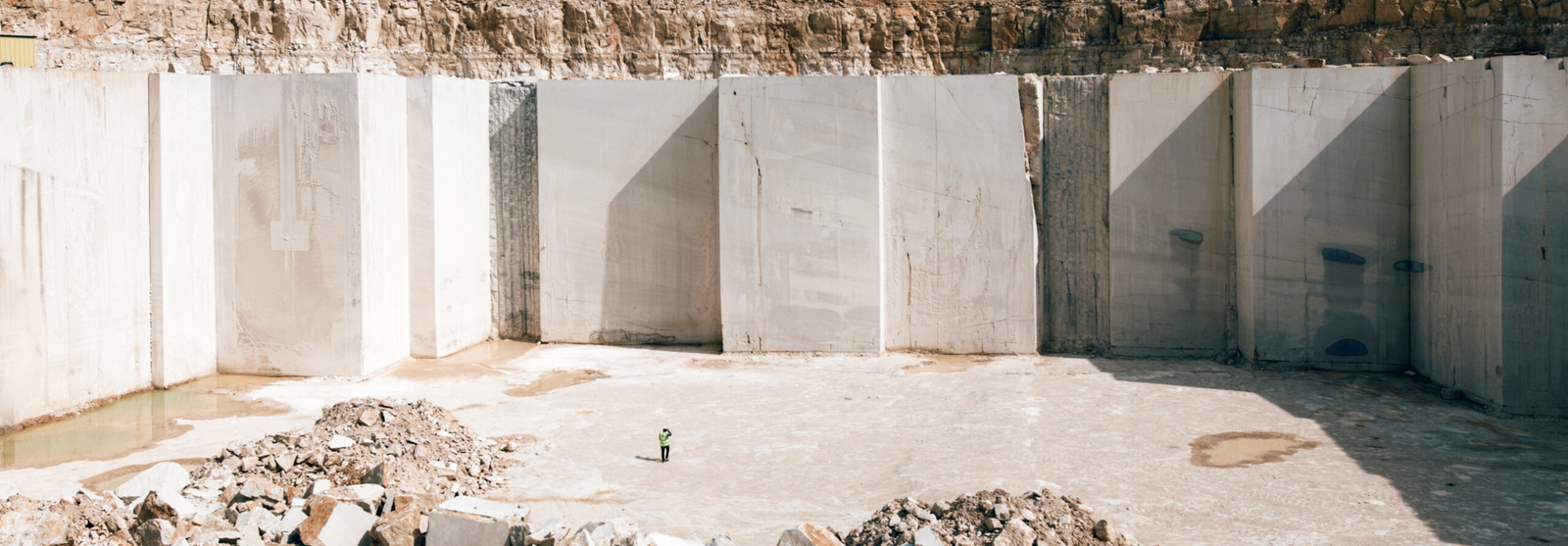
Marble isn’t just a static slab — it’s alive with the energy of the world around it. With its porous soul and ever-evolving character, it breathes with the space it inhabits, responding to light, time, and touch. Every vein, every subtle shift in tone, is a natural fingerprint—one-of-a-kind, impossible to replicate. It carries a quiet richness, a sense of history formed deep within the earth, and now, it becomes part of your own.
Far from cold or sterile, it brings a warmth that’s both visual and emotional. It softens over time, not with wear, but with grace. It gathers stories—of morning coffee cups, candlelit dinners, the occasional spill or celebration—and holds them without judgment. These moments leave gentle traces, making the surface more personal, more human. It doesn’t resist the passage of time; it welcomes it, growing more beautiful, more layered, more soulful with every passing season.
Whether you’re designing a kitchen, a bathroom, or a quiet corner of a living space, choosing this material is like choosing a companion—one that will grow with you, age alongside you, and reflect the life unfolding around it. It becomes more than just part of your home—it becomes part of your story. A silent witness to the everyday and the extraordinary, to change and continuity, to memory and meaning.
It’s not about perfection. It’s about presence. About grounding your space in something real, something timeless. In a world full of fast trends and fleeting finishes, this is a choice that endures—not because it resists change, but because it embraces it with quiet elegance.
Drop by our showroom to see our stunning collection:
Tampa, FL , St Petersburg, FL , Orlando, FL , Naples, FL , Sarasota, FL, Fort Myers, FL , Jacksonville, FL , Houston, TX and Savannah, GA